Desk workers
Eight hours in a chair, then an evening on the sofa. The lumbar curve gives up long before you notice it has.
Spinal decompression · at home
Eight hours in a seat compresses your lumbar discs millimetre by millimetre. Lie back over the arch for five minutes and let gravity hand that space back.
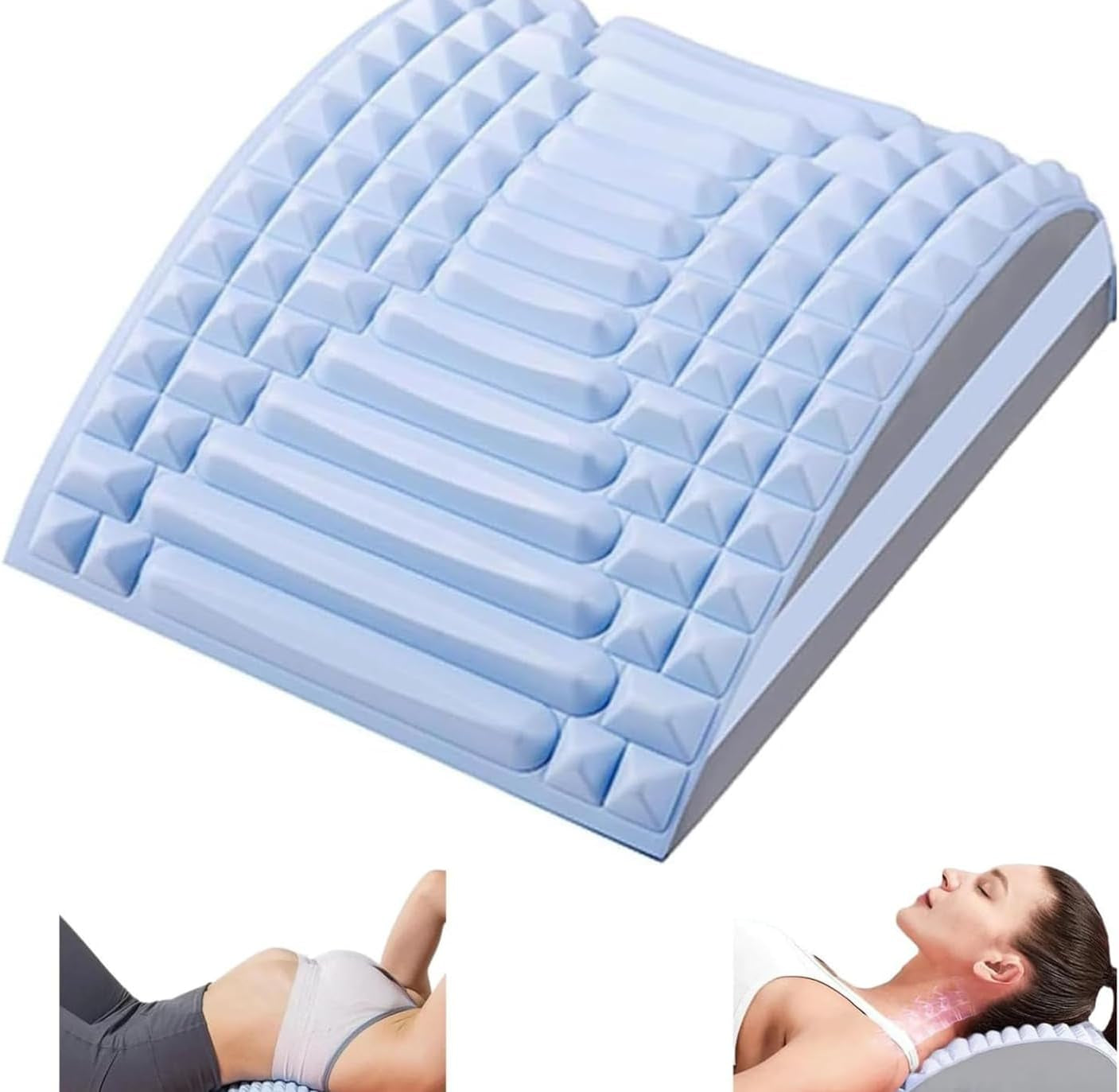
Where it hurts, where it helps
Tap a point on the spine to see what happens there — and what the arch does about it.
Years of phones and screens flatten the natural curve of your neck. Flip the arch over, rest the base of your skull on it, and that curve gets supported from underneath. If you work at a computer, this side matters as much as the lumbar one.
Sitting closes the chest, and the body learns that shape. Lying back over the arch opens it in the other direction — which is why better resting posture is usually the change people notice about a month in.
This is the one that aches when you stand, stiffens overnight, and sometimes sends a sharp line down one leg. Your own body weight plus the arch gives those discs room to decompress — no pushing, no pulling.
Built for real days
Pass your cursor over a card.
Eight hours in a chair, then an evening on the sofa. The lumbar curve gives up long before you notice it has.
Same seat, same angle, hundreds of miles. Your lower back doesn't get a single change of position all shift.
Lift, bend, twist, repeat. The load doesn't disappear when the shift ends — it accumulates quietly for years.
If the first ten minutes of your morning go into loosening up, that's the compression talking.
The whole routine
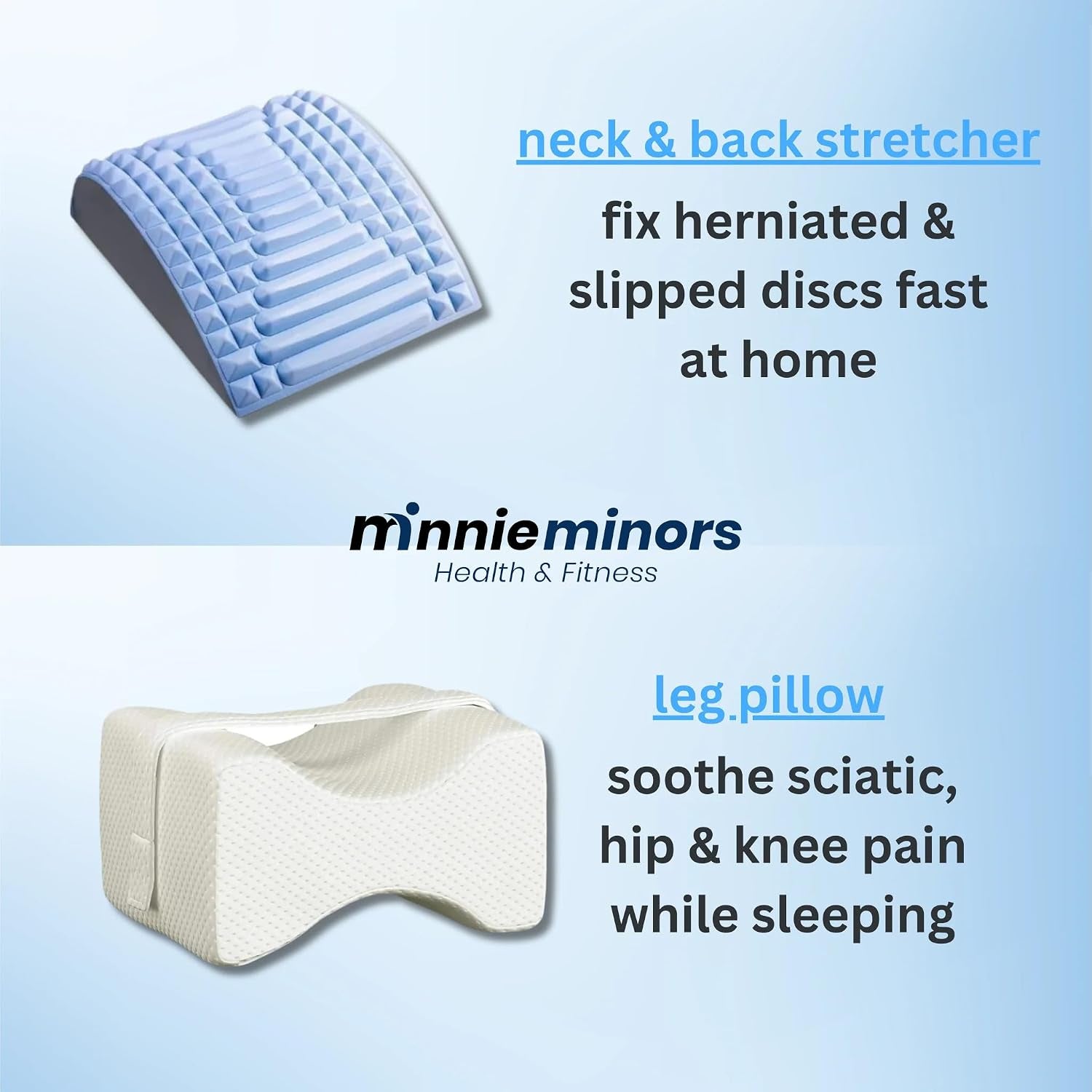
Set it on the floor, lie back with your lower spine over the arch, and breathe. That is the entire method. No cords, no batteries, no assembly, no twenty-page manual.
Why it works
Open one and the photo beside it changes.
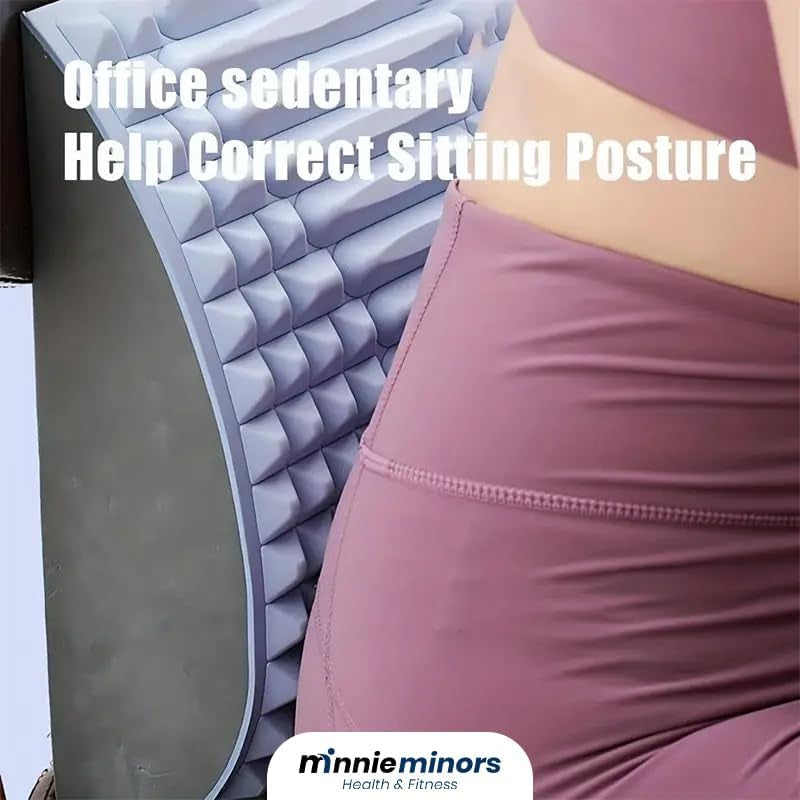
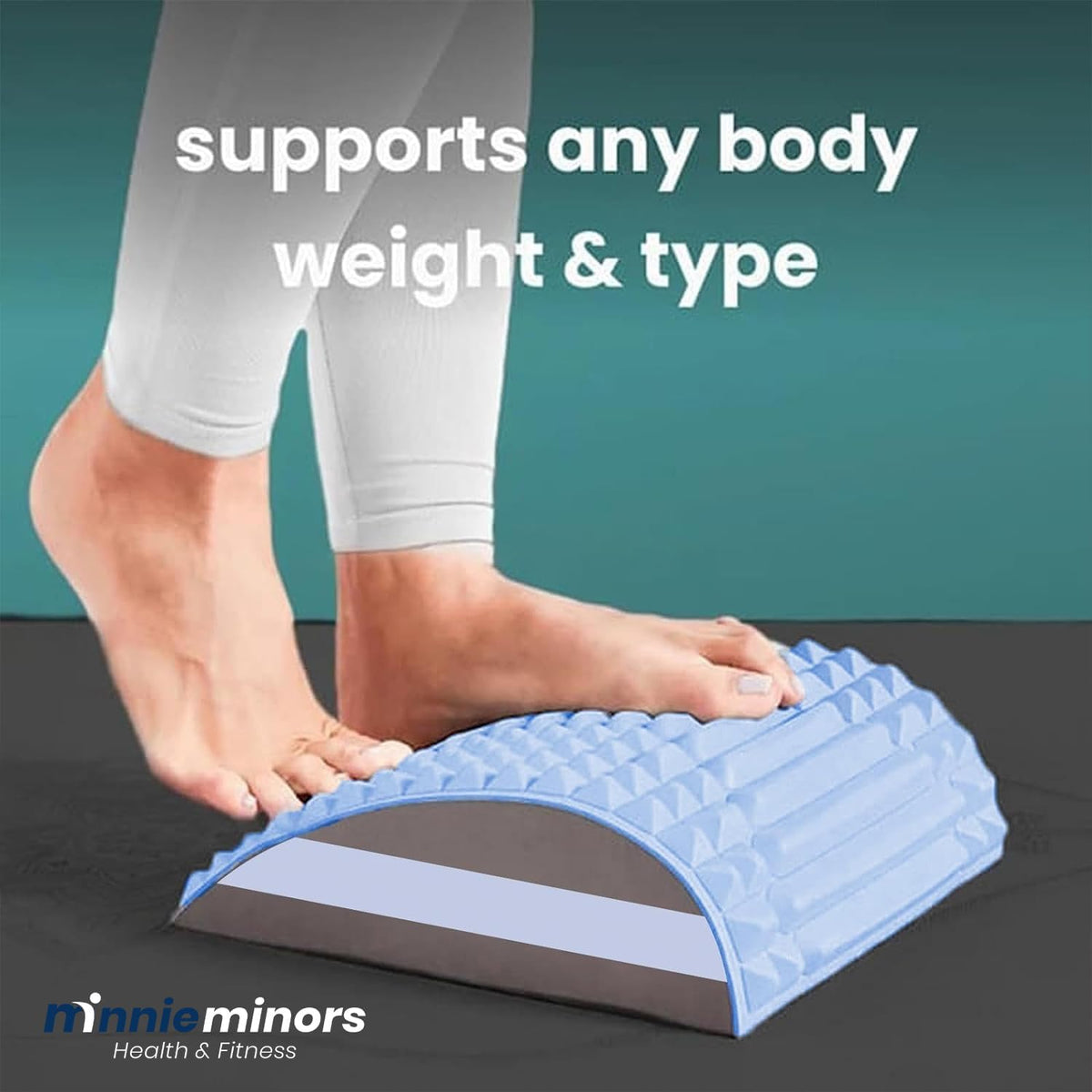
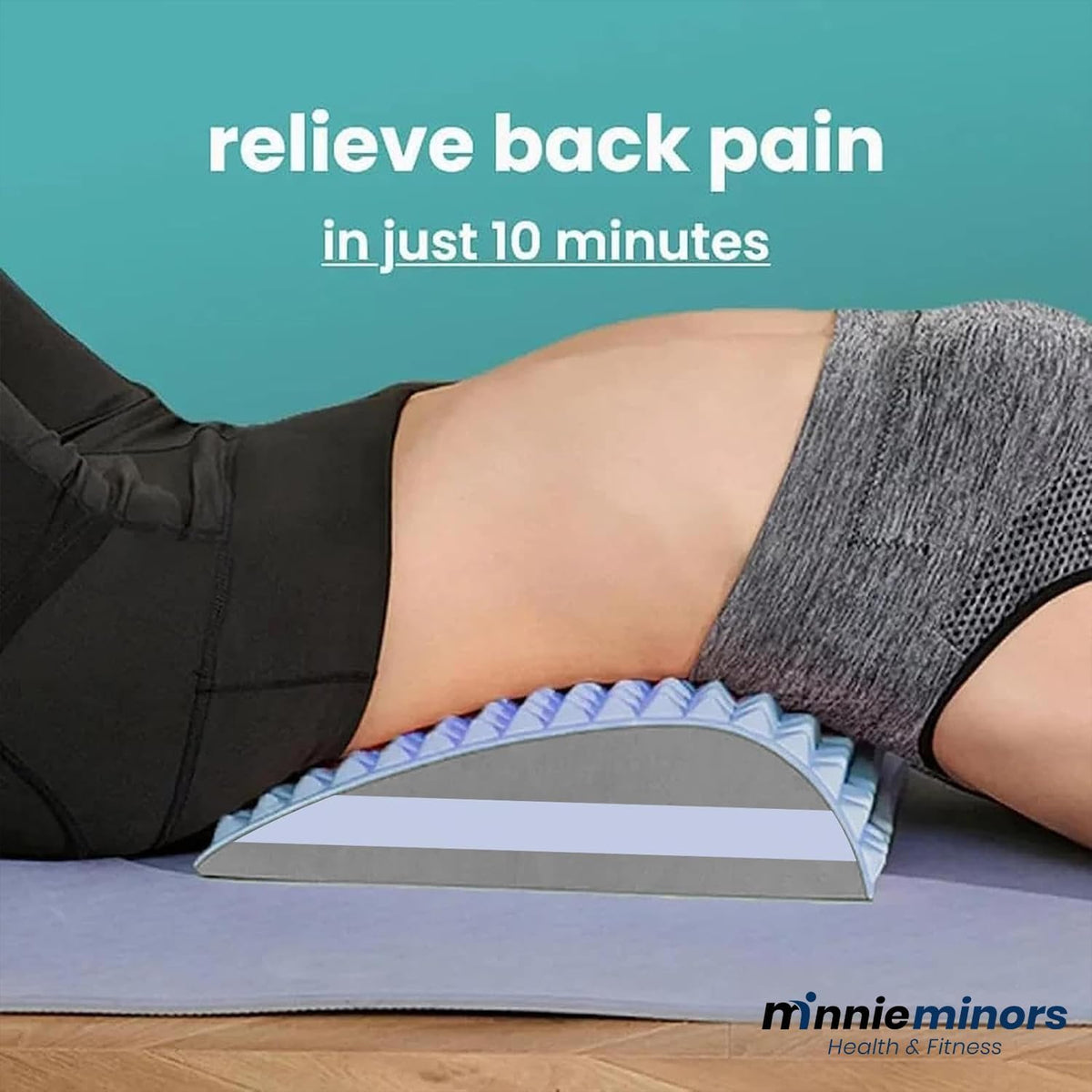

You don't push, pull or hold anything. You lie back and your own body weight opens the space between the vertebrae. That's why it still happens on the days you have no energy to exercise.
Start on the gentlest level and stay there until the stretch feels easy, then work your way up as you gain flexibility. That's the difference between a gadget you use twice and one you're still using a year from now.
Rest the base of your skull on the same arch and it restores the cervical curve — the one that flattens out from years of looking down at a screen. Two problems, one object.
Reinforced ABS frame with high-density foam padding, rated to 330 lbs. Under 2 lbs in total, so it fits in a carry-on and comes with you.
Five minutes, every day
No gym, no appointment, no charging cable, nothing to assemble. Just you, the arch and five quiet minutes at either end of the day.
What to expect
Here's the honest sequence, in the order people tend to report it.
This is a stretching and decompression device, not a medical treatment. If you have a diagnosed herniated disc, osteoporosis, spinal surgery in your history, or you're pregnant, talk to your doctor or physical therapist before using it.
An immediate sense of opening through the lower back as held tension releases. Most people notice it before they stand back up.
Less stiffness getting out of bed, and less of that seized-up feeling when you stand after a long stretch of sitting.
Your chest opens and your shoulders stop rolling forward, so upright becomes the position you fall into instead of the one you have to remember.
An honest comparison
All of these help someone. Here's where each one actually lands.
| Restore arch | Painkillers | Massage gun | PT session | |
|---|---|---|---|---|
| Works on the compression, not just the signal | ||||
| Costs nothing after you buy it | Every refill | $80–150 each | ||
| Time it takes | 5 min | Instant | 10–15 min | 40 min + travel |
| You can do it alone, at home | ||||
| Works the neck as well as the lower back | Not advised | |||
| Nothing to charge, refill or replace |
Physical therapy and medical advice do things no object can. This isn't a replacement for either — it's what you do on the other twenty-nine days of the month.
Before you buy
It shouldn't. Start on the lowest of the three heights and stay there until the stretch feels easy, then move up. A deep stretch is fine. Sharp pain is a signal to stop, not to push through.
Most people feel the lower back open during the very first session. The changes that stick — easier mornings, less stiffness after sitting — build over the first few weeks of daily use.
Ask your doctor or physical therapist first. Same goes for osteoporosis, past spinal surgery, or pregnancy. And if your pain is sharp or comes with weakness in your legs, see a doctor — no stretcher fixes that.
The frame is reinforced ABS with high-density foam padding and is rated to 330 lbs. The arch supports the whole lumbar curve rather than one point, so the load spreads out along your back.
A floor. No power, no charging, no app, no assembly, and no accessories to buy later.
Use it for 30 days. If your back doesn't feel different, tell us and we refund you. You don't need the original box, and we won't make it awkward.
Nothing to lose
No awkward questions, no restocking fee, no returning it in the original packaging. One session with a physical therapist costs more than this and lasts forty minutes — this one lives in your living room and is available every day of the year.
Free shipping across the US · Delivered in 3–5 business days